

〜The Surprising Reasons Why Coffin Meditation Feels So Comforting〜
When you hear “getting into a coffin,” does the word “scary” immediately come to mind? Honestly, that was my first reaction too. When a friend told me, “There’s a place in Takadanobaba where you can meditate in a coffin,” I laughed it off as a joke.
But when I looked at the reactions of people who actually tried it, I found an overwhelming number saying things like “It wasn’t scary at all—it felt amazing,” “I was moved to tears,” and “I want to go back.” So why does the experience of lying in a coffin heal people so deeply? Let me share the secret from my own perspective as someone who tried it firsthand.
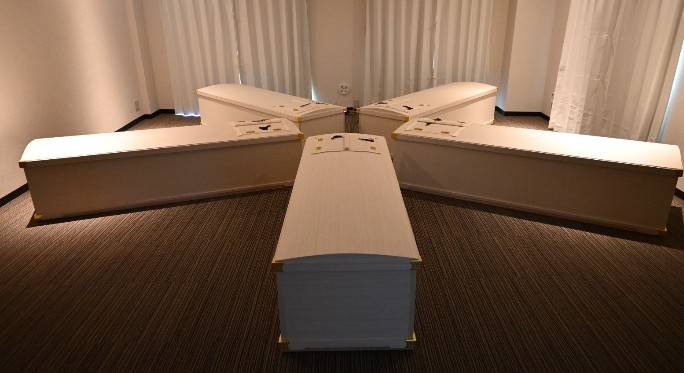
Table of Contents
What Exactly Is the “Kanoke In” Experience?

“Kanoke In” is an experiential meditation service located in Takadanobaba, Tokyo. As the name suggests, it has gained attention for its unique concept: meditating while lying inside a real coffin.
Here’s what the experience looks like:
- You lie down inside the coffin (you can choose whether to close the lid or leave it open)
- Nature visuals and background music play during meditation
- You spend 30 minutes in silence, facing yourself
- You can take a commemorative photo inside the coffin after the experience
“Isn’t it scary being closed in like that?”—I completely understand that concern. I thought the same thing. But the actual coffin is made of natural wood with minimal decoration. The sheer simplicity of it, with nothing unnecessary, actually creates a sense of security—something I realized only after the experience.
At 2,000 yen, it’s remarkably affordable. The fact that such a unique experience is available in central Tokyo at this price is another reason for its popularity.
3 Reasons Why Kanoke In Isn’t Scary

This is probably what you’re most curious about. Why isn’t it scary to get into a coffin? Based on testimonials and my own experience, here are three key reasons.
Reason 1: The Music and Visuals Transport You to Another World
The moment you lie down in the coffin, background music and visuals begin. Nature footage that feels like walking through a forest, the sound of waves, gentle ambient music. The effect is more powerful than you’d imagine—the awareness that “I’m inside a coffin” simply fades away.
For the first two or three minutes, you might notice things like “I can feel the wood” or “This is an enclosed space.” But as you focus on the BGM, you find yourself slipping into a meditative state before you know it. The combination of sensory deprivation and the acoustic experience is designed to generate relaxation rather than fear.
Reason 2: There’s No Feeling of Being “Trapped”
When you hear “coffin,” you probably picture a sealed, dark box. But at Kanoke In, you can choose whether to open or close the lid. Many first-timers apparently opt to keep the lid open.
Also, the natural wood coffin is surprisingly spacious, with no sense of being cramped. I’m 170cm tall and had plenty of room to lie down comfortably. It was particularly striking when a friend of mine, who tends toward claustrophobia, said “It was totally fine.”
Reason 3: Contemplating Death Actually Brings a Sense of Liberation
This was the most unexpected part. While quietly thinking “I’m going to die someday” inside the coffin, the present moment suddenly became remarkably clear.
There’s an ancient philosophical concept called “Memento Mori”—remember that you will die. By becoming aware of death, your motivation to live fully in the present intensifies. Coffin meditation is essentially a way to practice this concept experientially.
My Honest Experience: A Candid Account
I’ll be honest. The night before my experience, I felt a twinge of regret. “Maybe I should have backed out after all.”
But when I arrived at Kanoke In in Takadanobaba, the staff were incredibly gentle, and the atmosphere of the space was calm and welcoming. The moment they said, “If it gets too much, you can come out anytime,” I felt the tension melt from my shoulders.
The Moment I Got In: The First 5 Minutes Were Definitely Nerve-Wracking
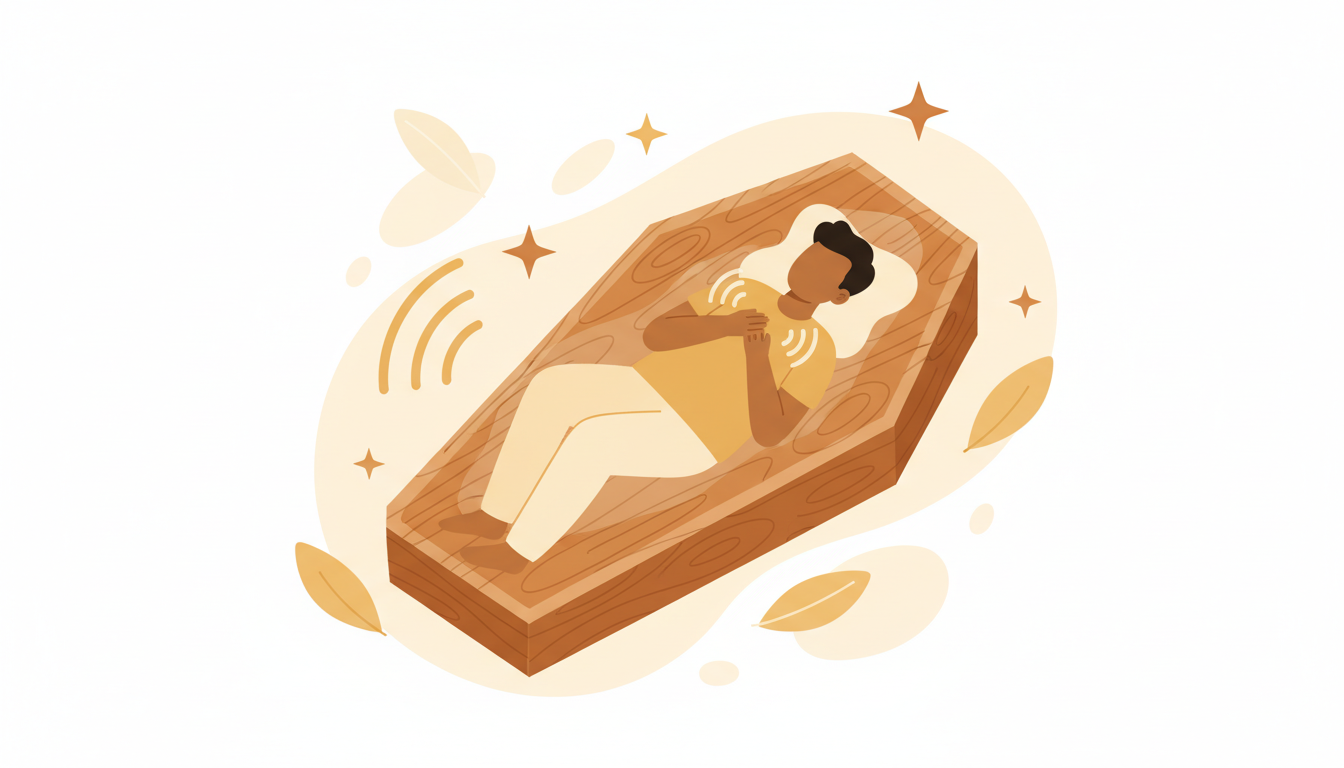
The instant I lay down in the coffin, the scent of wood and silence arrived simultaneously. When I closed the lid, outside sounds became strangely distant. The realization “Oh, I’m actually in a coffin” became real, and I felt my heart rate pick up slightly.
But when the BGM started, everything changed. Gentle piano music layered with birdsong and the sound of wind. The moment I thought, “This music is really nice,” the tension began to dissolve.
10 Minutes In: An Astonishing Depth of Stillness
By the 10-minute mark, I had entered a completely relaxed state. I rarely achieve this level of depth in my regular meditation practice. The coffin as a space blocks out information from the outside world. No phone to check, no one to talk to. That forced disconnection gave me time to reset my brain.
30 Minutes Later: The Feeling When I Emerged
The moment I came out of the coffin, the light felt blindingly bright. And a strange feeling of gratitude welled up. “Being alive is an incredible thing”—an emotion I would never normally have. On the walk home, I was surprised to find myself saying “I want to come back.” Far from being scary, what remained was a desire to experience it even more.
The Surprising Psychological Benefits of Coffin Meditation
Beyond simply being “an enjoyable experience,” coffin meditation has psychological foundations. Let’s explore why this experience heals people.
The Effects of Sensory Deprivation
By entering the coffin, visual, auditory, and tactile information is significantly limited. This closely resembles a state known as sensory deprivation, where the brain, freed from external stimuli, can more easily enter a deep state of relaxation. Research in neuroscience from the United States has shown that sensory deprivation experiences are associated with reduced anxiety levels and enhanced creativity. For modern people who are constantly exposed to excessive information, this “information break” is particularly effective.
“Imagining Death” Enhances the Will to Live
In psychology, it’s well known that mortality salience—the awareness of death—profoundly influences human values and behavior. Multiple studies have shown that after becoming conscious of death, people tend to cherish their relationships more deeply and focus more on the present moment. The quiet time spent confronting “death” inside the coffin may have the effect of resetting everyday worries and helping you realize what truly matters.
The Transformative Power of Ritualistic Experiences
From an anthropological perspective, the act of “entering a coffin” is positioned as a rite of passage in many cultures. From “living funeral” ceremonies at temples in Thailand to “coffin experience programs” in South Korea, experiential death awareness education is spreading across Asia. Such ritualistic experiences bring a sense of reset that separates “the old self” from “the current self.” This tends to resonate particularly deeply with those at turning points in life or those feeling stuck.
Addressing Common Concerns for First-Timers

For those thinking “I want to try it, but I’m still anxious,” here are answers to common concerns.
“I’m claustrophobic—will I be okay?”
This is the most common question. In fact, the lid opens and closes freely, so you can experience it with the lid open. The interior of the coffin is surprisingly spacious and is not structured in a way that would make you feel suffocated. If you’re worried, just consult with the staff beforehand—they’ll give you reassuring advice.
“What should I wear? Do I need to bring anything?”
Any comfortable clothing will do. Since you’ll be lying down inside the coffin, loose-fitting clothes that don’t constrict you will be most comfortable. No special items are needed, and you can come empty-handed.
“Can I do it alone?”
Absolutely. Experiencing it alone is actually said to lead to deeper introspection. Going with friends can be fun for taking commemorative photos, but when you want to truly face yourself, that may be when coffin meditation reveals its greatest value.
Frequently Asked Questions (FAQ)
Q1: How long is the Kanoke In experience?
The coffin meditation experience lasts 30 minutes. You spend the time relaxing inside the coffin while background music and nature visuals play.
Q2: Can I take a commemorative photo after the experience?
Yes, you can take photos while in the coffin. Many people post them on social media—it’s popular as a record of this unique experience.
Q3: Do I need a reservation?
Reservations are recommended depending on availability. It’s best to check the official website (https://kanoke-in.com/) before visiting.
Q4: Are there any religious concerns about the coffin experience?
Kanoke In is strictly a meditation and experiential service with no connection to any specific religion or faith. People from all backgrounds visit as a philosophical experience to deepen their perspectives on life and death.
Q5: What if I start feeling unwell during the experience?
You can exit the coffin at any time. Staff are always available to assist, so don’t hesitate to speak up if you feel any discomfort.
Conclusion
Has this article helped answer the question “Why isn’t Kanoke In scary?” Let me recap the key points:
- Background music and visuals transform the inside of the coffin into another world
- The lid opens freely, so you can experience it at your own pace
- Contemplating death sharpens your awareness of being alive
- Sensory deprivation effects make it easier to enter a deep state of relaxation
- Most people who try it report feelings of “I want to come back” and “I felt liberated”
What you expected to be scary turns out to be completely different once you try it. That might be the greatest “secret” of coffin meditation. Why not step away from the noise of daily life and give yourself a moment of quiet self-reflection?
This is an experience I can confidently say is worth trying at least once in your life. Let your first step begin—from inside the coffin.